
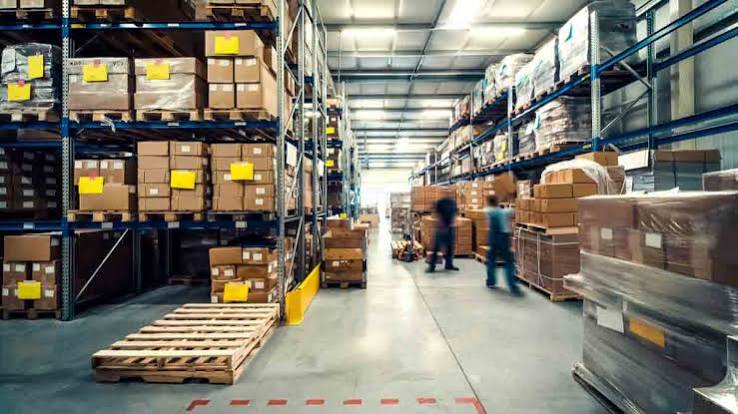
If you’re running an online store, whether on Amazon, Flipkart, Meesho, or your own Shopify site, there comes a point where your spare bedroom, garage, or a rented flat just can’t hold inventory anymore. That’s the moment most sellers start searching for warehouse space for e-commerce sellers, and quickly realize it’s a very different process from renting a home or a small shop.
This guide walks you through everything a first-time seller needs to know before signing a lease: how much space you actually need, what to look for in a location, what it costs, and the mistakes that trip up almost everyone in their first year.
Why E-commerce Sellers Need Dedicated Warehouse Space
India’s online retail boom has made warehousing one of the fastest-growing segments of commercial real estate. Demand from e-commerce firms has repeatedly outpaced overall warehouse leasing growth over the past decade, and that trend has only accelerated as more sellers move from marketplaces to their own D2C (direct-to-consumer) websites.
For a growing seller, a proper warehouse isn’t a luxury, it’s what unlocks the next stage of business:
- Room to hold more SKUs without cramming inventory into unsafe or unsuitable spaces
- Faster order fulfillment, since a dedicated packing and dispatch zone speeds up daily operations
- Compliance-ready storage for GST record-keeping, quality checks, and returns processing
- Better courier and logistics partner relationships, since most 3PLs prefer picking up from a fixed commercial address rather than a residential one
- Room to scale hiring packers, adding shelving, or introducing barcode scanning simply isn’t possible in a spare room
If you’re serious about growing your online business, finding the right warehouse space for e-commerce sellers is one of the first “adult” decisions you’ll make as a founder.
How Much Warehouse Space Do You Actually Need?
This is the number one question first-time sellers get wrong, usually by overestimating. A rough starting formula:
- Calculate your average inventory volume. Multiply the size of your average SKU box by your typical stock quantity (usually 30-45 days of inventory for most categories).
- Add 30–40% extra for aisles, packing tables, a returns corner, and staff movement space. A warehouse packed wall-to-wall with stock is inefficient and unsafe.
- Factor in seasonal peaks. If you 3x your inventory during festive sales (Diwali, Republic Day sales, etc.), either plan for that peak or keep a flexible short-term expansion option with your landlord.
Most early-stage D2C sellers in India start with anywhere between 500–2,000 sq. ft. of warehouse space, moving to 5,000+ sq. ft. once they cross a certain order volume. There’s no universal number, it depends entirely on your product category (apparel needs less per unit than furniture, for instance).
What to Look for When Choosing Warehouse Space
1. Location and connectivity
This is the single biggest factor in your logistics cost. Ideally, your warehouse should be:
- Close to a national highway or major arterial road for easy truck access
- Within a reasonable radius of courier hubs and your largest customer base
- Not so deep inside a city that trucks face entry restrictions during daytime hours
In Tier-2 hubs like Lucknow and satellite cities around Delhi-NCR (such as Greater Noida), sellers increasingly prefer warehouse space just outside city limits, close enough for fast last-mile delivery, but cheaper and easier to access for heavy vehicles than a warehouse space in a congested urban core.
2. Floor strength and ceiling height
If you’re stacking pallets or installing racking systems, check the floor’s load-bearing capacity and the ceiling height. A warehouse with 20-24 ft. clear height lets you use vertical racking, which can double your effective storage without expanding your footprint.
3. Electricity and connectivity
Modern fulfillment relies on barcode scanners, packing stations, CCTV, and often cold storage or climate control for certain categories. Confirm the power load available and whether there’s backup power, a warehouse with erratic electricity can quietly cost you thousands in delayed dispatches.
4. Loading and unloading access
Look for a warehouse with a proper loading dock or at least ground-level access for trucks. If your warehouse is on an upper floor with no goods lift, every incoming and outgoing shipment becomes a manual labor cost.
5. Security and fire safety
Insurance providers (and most courier partners) will ask about fire safety compliance, CCTV coverage, and basic security measures before onboarding your warehouse as a pickup point. Check this before signing, not after.
6. Flexibility of lease terms
Early-stage sellers should avoid long, rigid lease lock-ins. Look for warehouse space with:
- Shorter lock-in periods (6-12 months rather than 3-5 years)
- Options to expand into adjoining space as you grow
- Clear terms on maintenance, property tax, and who bears them
Understanding Warehouse Rental Costs in India
Warehouse rents vary hugely by city, connectivity, and warehouse grade (Grade A facilities with modern infrastructure cost more than basic Grade B or C sheds). As a general reference, warehousing rentals in India have historically ranged from roughly ₹18–30 per sq. ft. per month in NCR and similar markets, though this fluctuates with demand and micro-location.
Tier-2 cities in Uttar Pradesh typically offer meaningfully lower rents than Delhi, Gurugram, or Mumbai, while still giving sellers solid connectivity to major consumption markets which is exactly why more e-commerce and D2C brands are now scouting warehouse space for e-commerce sellers in cities like Lucknow, Kanpur, and the Greater Noida belt instead of only looking at metro hubs.
When budgeting, always account for:
- Base rent (per sq. ft. per month)
- Security deposit (commonly 3-6 months’ rent)
- Maintenance charges (CAM)
- Property tax, if not included
- Fit-out costs (racking, packing stations, electrical work)
Owned Warehouse vs. Leased Warehouse vs. Shared Fulfillment Space
New sellers typically choose between three models:
Leased/rented warehouse space: The most common route for sellers who need control over layout, branding, and operations but don’t want to invest capital in buying property. This is usually the best starting point.
Shared fulfillment centers (3PL warehouses): Third-party logistics providers rent you a fraction of their warehouse and handle storage, packing, and shipping for you. This works well for very early-stage sellers with low order volumes who aren’t ready to manage their own space yet.
Owned warehouse/industrial land: Makes sense only once a business has stable, high order volumes and wants to build a long-term logistics asset, usually a Year 3+ decision, not a starting point.
For most people searching for warehouse space for e-commerce sellers for the first time, leasing a small independent unit — with the option to scale into a larger space later — offers the best balance of control and flexibility.
Common Mistakes First-Time Sellers Make
- Renting space that’s too large “just in case.” This locks up capital in rent instead of inventory or marketing. Start slightly tight and plan an expansion clause into your lease.
- Ignoring last-mile connectivity. A cheap warehouse far from courier hubs can quietly inflate your delivery timelines and courier costs.
- Skipping a written inventory and safety audit. Fire safety and structural checks matter and most courier/logistics partners will require documentation before onboarding your address.
- Not negotiating maintenance and escalation clauses. Annual rent escalations of 5–10% are standard; make sure they’re capped and clearly stated in the agreement.
- Choosing based on rent alone. A slightly costlier warehouse near a highway junction often saves more in transport costs than a cheaper one that’s poorly connected.
Quick Checklist Before You Sign
- Space matches your 6–12 month inventory projection, not just today’s needs
- Truck/loading access confirmed
- Power backup and load capacity verified
- Fire safety and security compliance checked
- Lease terms include reasonable lock-in and escalation clauses
- Location is within a practical radius of your courier/logistics partners
- Total cost (rent + deposit + CAM + fit-out) fits your cash flow, not just monthly budget
Final Thoughts
Choosing the right warehouse space for e-commerce sellers is one of the highest-leverage decisions a growing online business can make, it affects your costs, your delivery speed, and how easily you can scale. Rather than rushing into the first available unit, take time to map your real inventory needs, check connectivity and infrastructure carefully, and negotiate lease terms that give you room to grow.
If you’re an e-commerce or D2C seller exploring warehouse space in Lucknow, Greater Noida, or the wider Delhi-NCR region, it’s worth speaking to a developer who understands both the logistics side and the real estate side of the equation, so your first warehouse actually sets you up for your next five years of growth, not just your next quarter.